I must admit I was not too happy with the World Cup finals, even in the semifinals I found it hard to root for anyone in particular. Upon review though there were so many great games throughout. Myself like many of the world were captured by the heart, competitiveness, and humility of the Cabo Verde players. They tied with Spain holding them to no goals, and nearly clipped Argentina out with a close 3-2 loss, giving up a goal to lose in the 111th minute. I knew then at some point I’d dig more into this island nation. I found this is a place defined by the sea, creole culture, and sodade – which is a longing.
Since this is Between Maps and Meaning we must start with the geography. The island nation consists of 10 big islands 9 of which have populations, and a few smaller islands off the coasts of some of their larger islands. The country finds itself off the coast of West Africa, and the islands themselves were created due to volcanic activity. Warm winds and sand from the African Sahel cause most of these islands to be very desert like. Only about 10% of the island is good for mass agriculture. It also is surrounded by the Atlantic Ocean which is a major component of its culture. One of the most interesting things is most of the major hurricanes that hit the American east coast are typically born in the warm waters near Cabo Verde. It’s hard to touch the geography of each island because they differ so much, aside from the arid like islands there’s some exceptions like Santo Antão which is filled with deeply green valleys, and Santiago which is a mixture of mountains/agricultural valleys in-between. The capital Praia is on Santiago, and the island itself is estimated to be between 40-55% of the countries population.
When Portugal found the island there were no people, but they wasted little time importing slaves. As the slave trade slowed down things began to change for those who called the islands their home. It was a place that was prone to drought and famine. With only about 10% of the land fit for agriculture it became common practice to leave for other countries to find work. Today there are more people from Cabo Verde living outside the country than in it. Northeast US, Brazil, Angola, and Portugal all have major Cabo Verde populations. It was not uncommon to work in whaling, on boats, or other commercial fishing. Especially with so much drought and famine, sometimes the best way to survive was to leave. In the 1970s alongside Guinea-Bissau the country gained it’s independence from Portugal. Eventually a coup in Bissau led to Cabo Verde becoming its own country.
Their culture is very unique island to island. Its as if each island is getting influenced by completely different societies. Santiago is a place that seems to be strong with its more traditional Western African roots. Sao Vicente seems to have a strong Brazilian influence even having their own Carnival. Brava is very influenced by both Portugal and New England with many from this island having roots at some point in America. With so many micro cultures how can we broadly describe this culture?
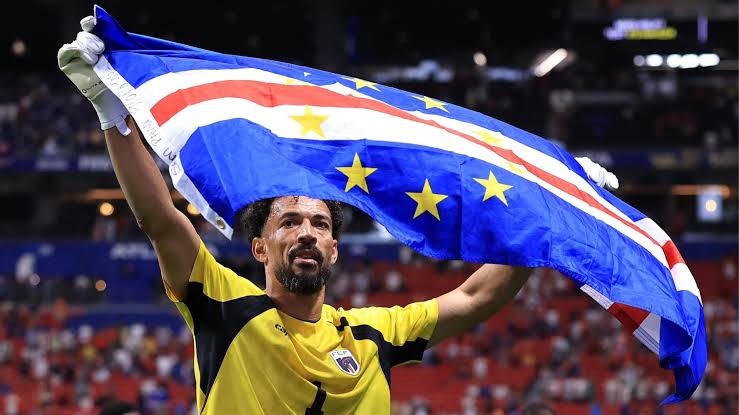
- The Ocean. As I mentioned before it was not uncommon for families to say goodbye as their breadwinners left on some boat for years at a time fixing sails, fishing, whaling, you name it. The sea created what some call their “11th island.” There’s a special Cabo Verde music called Morena. In this music it is not uncommon for lyrics to paint the sea as a divider. The sea is often the separator of families, lovers, and one’s home. Even as a divider it’s also apart of life! It’s a highway and a food source for the people of this island. The blue on their flag even represents the sea.
- Creole: Cabo Verde has developed their own unique form of a creole language largely spoken across all the islands. Although the official language is Portuguese everyone speaks, Kriolu. It is even sang in their Morena music. Cabo Verde was often a stop for travelers from Brazil, Portugal and New England. This mix of language, ideas, and religion helped to create such a unique Creole culture found nowhere else on earth. Although island to island this can differ from food, to music, and so much more it is a unique blend of many cultures. Typically Creole is a mix of Western African and who ever enslaved them. For the people of Cabo Verde this is not the case as travelers from all over the world have left their mark on their culture.
- Sodade: This is a word borrowed from the Portuguese language, but takes on a unique and heavy meaning for the people of Cabo Verde. It has become an identity to the people of this island nation. The word itself can be best described as a longing for something. The longing due to separation is an experience that Cabo Verdeans know too well. To the people of this island they miss their families, and for those away they miss their home (often one they have never seen.) Sodade takes on more than just longing and missing something. It more specifically means to miss something you are unsure will ever return. The uncertainty of reunion is a unique identifier for the people of Cabo Verde.
Their soccer team had so many unique players but I want to represent two in particular who stood out. When I wrote this piece these two players were living in my mind as I wrote each word. I don’t know them except through only stories and interviews. The first is Roberto Pico Lopes, who was born in Dublin, Ireland. He got to play for the Cabo Verde national team because his father was born in Cabo Verde. As the national team was getting invitations trying to get players to tryout for the team they came across him on LinkedIn. I’ve heard stories that he thought it was spam or fake, but I’m sure he didn’t think it was that fake when he found himself guarding Messi a few weeks ago. He represents the story of the person who is living on the “11th” island. Longing for a place he was never born. Playing his heart out for a country that he knows best only through stories. The second player is the goalie Josimar José Évora Dias otherwise known as Vozinha. He represents the other side of the coin born on the island of São Vicente. At 40 years old I could not believe he helped to hold Spain to 0 goals during the pool play. He was almost recklessly fearless against crosses. You could see his stoic leadership holding the team together through tough times. In extra time against Argentina they gave up a goal to go down 1-2. He helped to keep his teams emotions in check even having just given up a goal in extra time to possibly lose. Minutes later Cabo Verde would score to tie the game! Only to lose at the last second. Instead of feeling the weight of the loss, Vozinha is seen picking up players, encouraging them for their effort. I want to share a quote he gave, “Moments like these remain engraved in your heart forever.” This was after the close 3-2 heartbreak for Cabo Verde. Why would you want a heartbreak to live with you forever? Sodade as they say. For the people of Cabo Verde longing is apart of life, for if you miss something it means you’ve experienced a great joy. A joy that is worth feeling Sodade.
I pray for the island nation of Cabo Verde. May their future have more reunions! I also, pray for any of my readers feeling the weight of Sodade. Longing isn’t a bad thing. I think it’s ok that we wear it on our heart like Vozinha. But let us remember that God can lighten our load. That he can give us a peace beyond what’s imaginable. So if you’re feeling that Sodade, if the longing is just too much, remember to pray. Amen


Leave a Reply