I’ve had a bit of writer’s block these past few days, but I’ve decided to break my silence with a series on wildcats. I want to start with a lesser-known cat: the Marbled Cat.
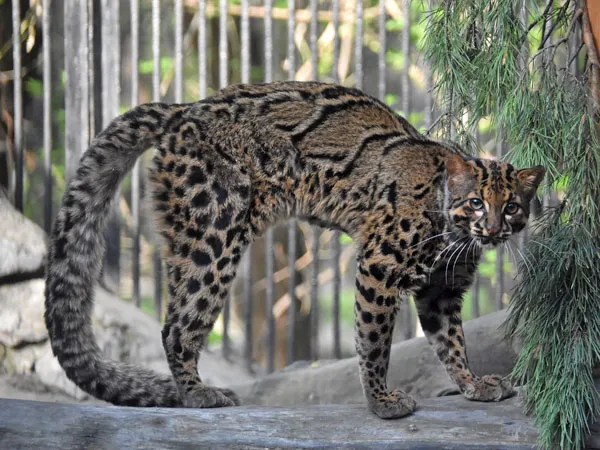
Besides being a very cute wildcat, I find the Marbled Cat fascinating, and I do wish there were more information available on this beautiful creature. Since this blog has a geography-based focus, let’s start there. You can find this cat living across tropical and subtropical forests in Southeast Asia. From Nepal and Thailand to Borneo and several other countries in between, it can live anywhere from sea level up to elevations as high as 7,000 feet.
Now to the obvious — it has a very long tail! It’s a useful tool for the Marbled Cat because this cat is essentially a tree dweller, and that long tail acts like a balance beam. Interestingly, even house cats use their tails for balance, but this cat, living high up in the canopy, needs a tail almost as long as its body. Another fascinating feature is how flexible its ankles are. Even from the picture above, you can see they look a bit unusual. The ankles can rotate nearly 180 degrees, which is extremely advantageous for a tree-dwelling cat. This allows it to climb and maneuver with ease. In fact, similar to squirrels you might see at the park, this cat can run down a tree headfirst.
It’s an animal that is considered either nocturnal or crepuscular. In general, it seems to be quite an elusive little creature. I wish I could find more information about its eyes — I’m sure there are interesting traits that help it see better in low light. Its eyes seem very owl-like to me.
Lastly, let’s talk about its prey. From what researchers understand, it eats what you might expect: tree-dwelling mammals like squirrels and other small rodents, along with birds and lizards. Some sources suggest that in certain areas these cats may even hunt bats and flying squirrels, possibly intercepting them mid-glide — although the marbled cat has not been observed closely enough to fully confirm this behavior.
I would love to see just how quickly these cats can move. They appear capable of crossing the canopy horizontally with impressive speed and balance, and those flexible ankles likely help them maneuver vertically up and down trees with ease.
They are currently considered a Near Threatened species, largely due to deforestation and habitat loss. That is especially sad to me as an animal lover — and someone who holds a special place in my heart for cats.
Maybe one day God will bless me with the chance to see a marbled cat. I would cherish that dearly. Until the next cat update I pray you all enjoy God’s peace this week.
 Between Maps and Meaning
Leave a comment